For years, I struggled with trading inconsistency. Some days I'd make brilliant decisions and substantial profits, while other days I'd make amateur mistakes that wiped out weeks of gains. The breakthrough came when I realized my problem wasn't knowledge or skill—it was the lack of a structured routine that prepared me mentally and technically for market challenges.
Your trading routine is your foundation for consistent performance. It transforms trading from a reactive emotional activity into a proactive professional practice. After refining my approach over thousands of trading days, I've developed this comprehensive routine that has dramatically improved my consistency and profitability.
The Pre-Market Preparation (60 Minutes Before Open)
This is the most critical period of your trading day. Proper preparation prevents poor performance.
Mental Preparation (15 minutes):
Meditation and Visualization (10 minutes): I practice focused breathing and visualize executing my plan perfectly, handling both wins and losses with equanimity
Affirmation of Trading Rules (5 minutes): I verbally review my key rules: "I risk 1% per trade," "I wait for A+ setups," "I follow my plan"
Market Analysis (30 minutes):
Overnight Price Action Review: How did Asian and European sessions affect my instruments?
Economic Calendar Check: What major news events are scheduled? I color-code them:
Red: High impact - avoid trading during these times
Yellow: Medium impact - trade with caution
Green: Low impact - normal trading
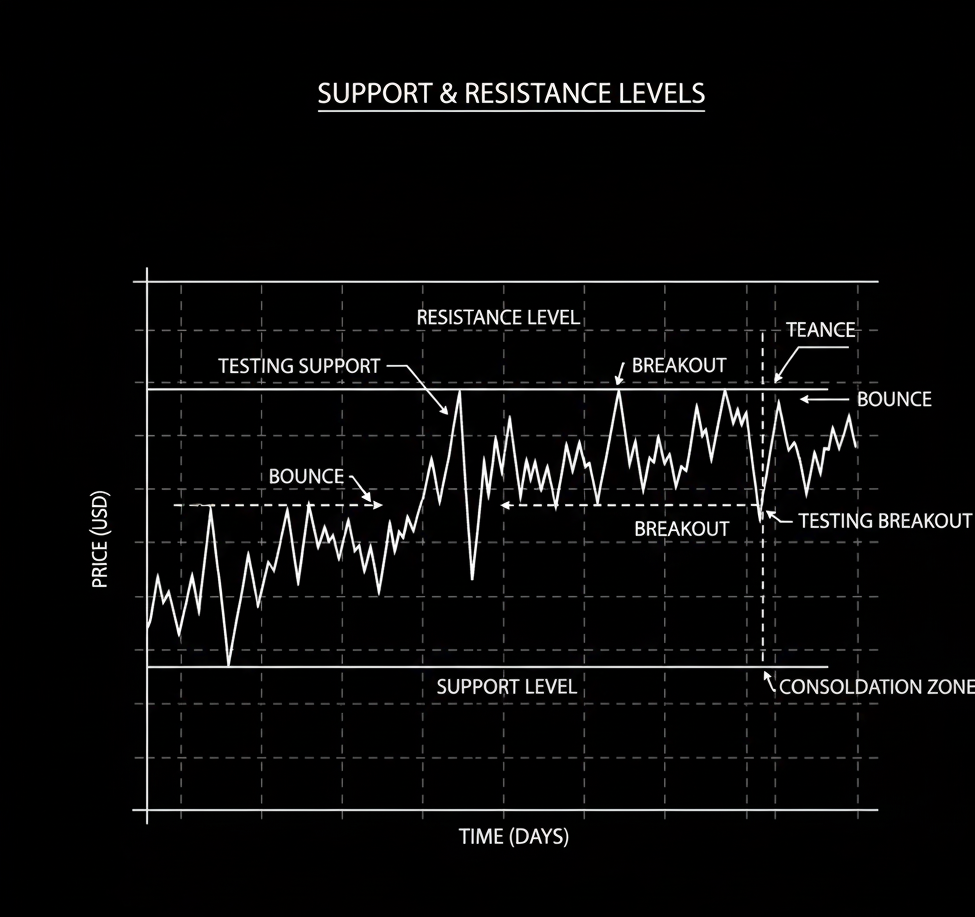
Key Level Identification: Mark today's crucial support/resistance on all timeframes
Market Condition Assessment: Is the market trending, ranging, or volatile?
Strategy Session (15 minutes):
Setup Identification: Which of my 3 primary setups are present?
Trade Plan Development: If setups exist, define exact entry/exit/risk parameters
Watchlist Creation: Maximum 5 instruments to monitor intensely
The Trading Session Execution
This is where preparation meets opportunity. I've structured my session to maximize focus and minimize emotional decision-making.
First 90 Minutes: Observation Period
I do not take new positions during this time because:
Initial volatility often creates false signals
Institutional order flow creates unpredictable moves
The true day's character reveals itself gradually
During this period, I:
Monitor how price interacts with my pre-marked levels
Observe volume patterns and sector rotation
Adjust my bias based on actual price action (not my pre-market expectations)
Main Trading Window (4-5 hours)
This is my active trading period where I implement strict focus protocols:
The 25/5 Focus Method:
25 minutes of intense screen focus
5 minutes away from screens (walk, stretch, hydrate)
This prevents fatigue-induced mistakes
Trade Entry Protocol:
Before every entry, I verbally confirm:
"This matches one of my 3 predefined setups"
"My risk is exactly 1% of account"
"Stop loss and profit targets are set"
"I have confluence from at least 2 timeframes"
The Post-Trade Process:
Immediately after entering any trade, I:
Walk away from screens for 5 minutes
Record the trade in my journal
Set price alerts for stop and target levels
Return to market analysis only after this process
Managing Different Market Conditions
Trending Days:
Focus on pullback entries in trend direction
Use wider timeframes for context
Let winners run with trailing stops
Maximum 3 trades per session
Ranging Days:
Focus on range boundary reversals
Use shorter timeframes for precision
Take quick profits at opposite range boundary
Maximum 2 trades, reduced position size
Volatile/News Days:
Often take no trades if volatility exceeds my parameters
If trading, use 50% normal position size
Wider stops to account for increased noise
Maximum 1 trade, early exit
The Mid-Session Reset (90 Minutes Break)
After 3-4 hours of trading, I take a complete break:
No screen time whatsoever
Physical activity (walk, exercise)
Proper meal away from trading desk
Mental reset through reading or music
This break is non-negotiable. Trading requires intense mental focus, and even professionals experience decision fatigue.
The Closing Session (Last 90 Minutes)
The final period requires special attention:
Opportunities:
Institutional rebalancing creates reliable patterns
End-of-day breakouts often continue next session
Volume spikes provide clarity
Dangers:
Low liquidity can cause erratic price action
Amateur traders often make emotional decisions
Overnight gap risk increases
My rules for this period:
Only take highest probability setups
50% normal position size
Must close before final 15 minutes unless swing trading
All day trades must be closed (no overnight holds)
The Post-Market Review (30-45 Minutes)
This is where real improvement happens. I conduct my review in this specific order:
Trade Analysis:
Review every trade taken today
Grade execution (A-F scale) based on plan adherence
Note emotional state during each decision
Identify patterns in both winning and losing trades
Performance Metrics:
Update my trading spreadsheet with today's results
Calculate daily P&L, win rate, risk-reward achieved
Compare actual vs expected performance
Track progress toward monthly goals
Strategy Refinement:
What worked well today? Why?
What didn't work? Why?
What patterns emerged that I can exploit tomorrow?
What mistakes must I avoid repeating?
Preparation for Tomorrow:
Update key levels based on today's price action
Review economic calendar for tomorrow
Set morning alerts for overnight developments
Clear charts and prepare fresh workspace
Weekly and Monthly Routine Elements
Weekly Review (Sunday Evening):
Analyze all trades from the week
Calculate weekly statistics and metrics
Review trading journal for pattern identification
Adjust trading plan if necessary
Set weekly goals and focus areas
Monthly Performance Review:
Comprehensive statistical analysis
Strategy performance breakdown
Risk management compliance audit
Personal development assessment
Next month's goal setting
The Psychology of Routine
Why this routine creates consistent results:
1. Reduces Decision Fatigue
By automating repetitive decisions, I preserve mental energy for crucial trade decisions.
2. Creates Positive Habits
Consistent repetition builds neural pathways that make disciplined behavior automatic.
3. Provides Structure in Chaos
Markets are unpredictable; my routine is my anchor in the storm.
4. Enables Continuous Improvement
The review process turns every trading day into a learning opportunity.
Adapting the Routine to Your Life
Not everyone can trade full-time. Here are adaptations:
For Full-Time Traders:
Follow the complete routine outlined above
Treat trading as your profession with set hours
Maintain work-life balance through strict time management
For Part-Time Traders:
Condense pre-market preparation to 30 minutes
Focus on end-of-day analysis rather than intraday
Consider swing trading instead of day trading
Use weekend for deeper analysis
For Weekend Traders:
Focus on weekly chart analysis
Implement end-of-week position trading
Use automated alerts for entry/exit signals
Dedicate Sunday evening for weekly planning
Common Routine Mistakes to Avoid
Mistake 1: Skipping Preparation
Solution: Make pre-market routine non-negotiable, even on "busy" days.
Mistake 2: Trading Through Fatigue
Solution: Recognize when you're tired and step away—forced trading usually loses.
Mistake 3: Neglecting Review Process
Solution: Schedule review time like any other important appointment.
Mistake 4: Being Too Rigid
Solution: Have contingency plans for unexpected market conditions.
Mistake 5: Isolating Completely
Solution: Balance solo work with trader community interaction.
The Results of Disciplined Routine
Since implementing this structured approach, my trading has transformed:
Win rate increased from 45% to 68%
Average risk-reward improved from 1:1.2 to 1:2.8
Maximum drawdown reduced from 28% to 9%
Emotional stability dramatically improved
Trading became consistently profitable rather than sporadically lucky
Remember: you don't rise to the level of your expectations; you fall to the level of your training. Your trading routine is your daily training regimen for market success. Make it consistent, make it comprehensive, and make it non-negotiable.

Leave a comment
Your email address will not be published. Required fields are marked *