When I first started trading, I believed success was all about finding the perfect indicator or the magic strategy that would print money. It took me six months of inconsistent results and several blown accounts to realize the painful truth: the biggest obstacle to trading success wasn't in the markets—it was between my ears.
The market doesn't care about your feelings, your financial goals, or your need to be right. It's a cold, impersonal entity that reflects the collective emotions of millions of participants. Successful trading isn't about predicting the future with perfect accuracy; it's about managing probabilities and your emotional responses to uncertainty.
Understanding the Two Enemies: Fear and Greed
Fear and greed are the twin demons every trader must conquer. Fear manifests as hesitation to enter valid setups, premature exits from profitable trades, or the inability to pull the trigger when your strategy gives a clear signal. Greed appears as holding winners too long, adding to losing positions, or overtrading in pursuit of quick profits.
I remember one particular trade that taught me this lesson vividly. I was in a profitable EUR/USD position that had moved 50 pips in my favor. Instead of taking partial profits as my plan dictated, greed convinced me to hold for "just 20 more pips." The market reversed, took out my breakeven stop, and continued moving another 80 pips against me. I went from a guaranteed win to an unnecessary loss because I let emotion override my rules.
The 3 Mindset Rules That Transformed My Trading
Trade the Chart, Not Your Emotions
Every morning before I look at any charts, I repeat this mantra: "I am a observer, not a predictor." My job is to identify high-probability setups based on price action and volume—not to impose my wishes on the market. When I feel excited about a potential trade, I step away for five minutes. If the setup still looks valid after that cooling-off period, I proceed. If not, I pass.No Trade is Worth Losing Sleep Over
If a trade position causes you anxiety or keeps you up at night, your position size is too large. I use the "sleep test" as my ultimate risk management tool. Before entering any position, I ask myself: "If this trade goes to my full stop-loss, will I be able to sleep tonight?" If the answer is no, I reduce my position size until the answer becomes yes.Protect Your Capital First, Profits Second
Professional traders focus on risk; amateurs focus on rewards. I start every trading day by reviewing my maximum daily loss limit (2% of my account) and my maximum per-trade risk (1%). These numbers are written in stone. No matter how "sure" a trade seems, I never violate these risk parameters.
Building Mental Resilience Through Routine
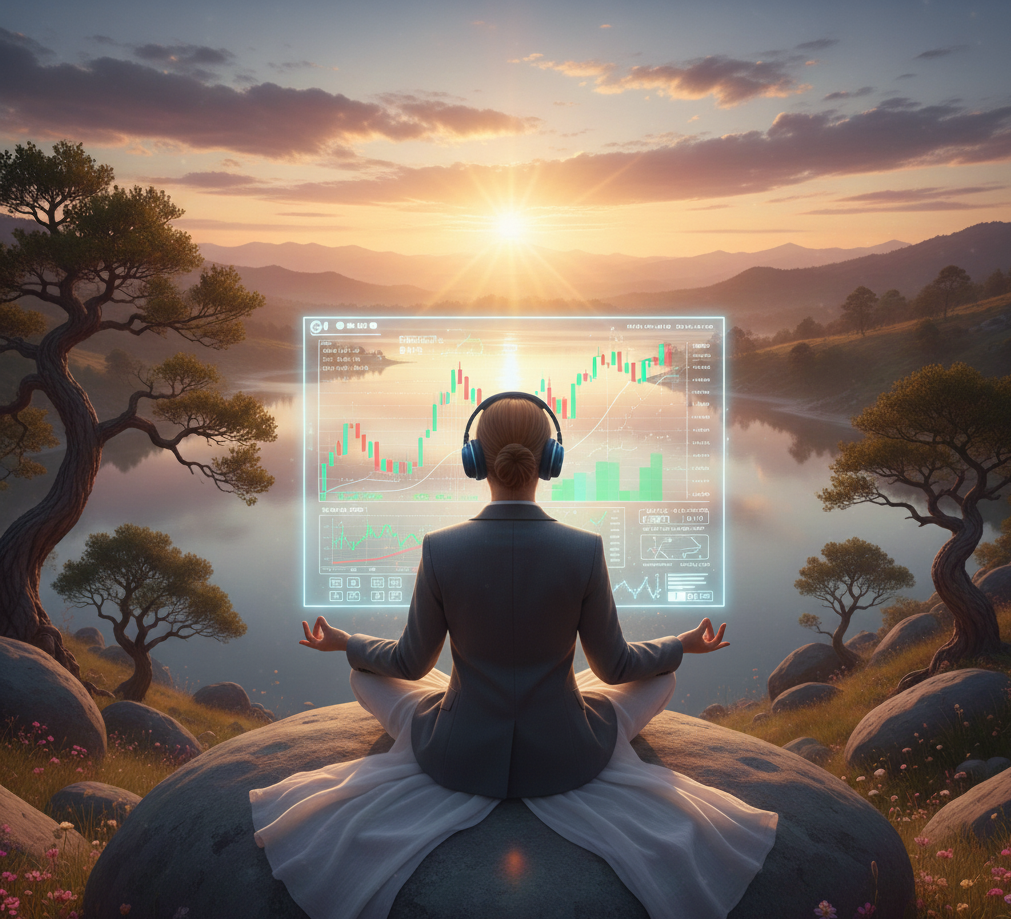
Your trading psychology isn't fixed—it's a muscle that strengthens with consistent practice. I've developed a pre-trading meditation routine where I visualize both winning and losing trades. This mental rehearsal prepares me emotionally for whatever the market brings. I also maintain a trading journal where I record not just my trades, but my emotional state during each decision.
Remember: Markets will always present opportunities, but capital is finite. Your psychology controls which of these realities dominates your results. Master your mind first, and the profits will follow as a natural consequence of your discipline.

Leave a comment
Your email address will not be published. Required fields are marked *